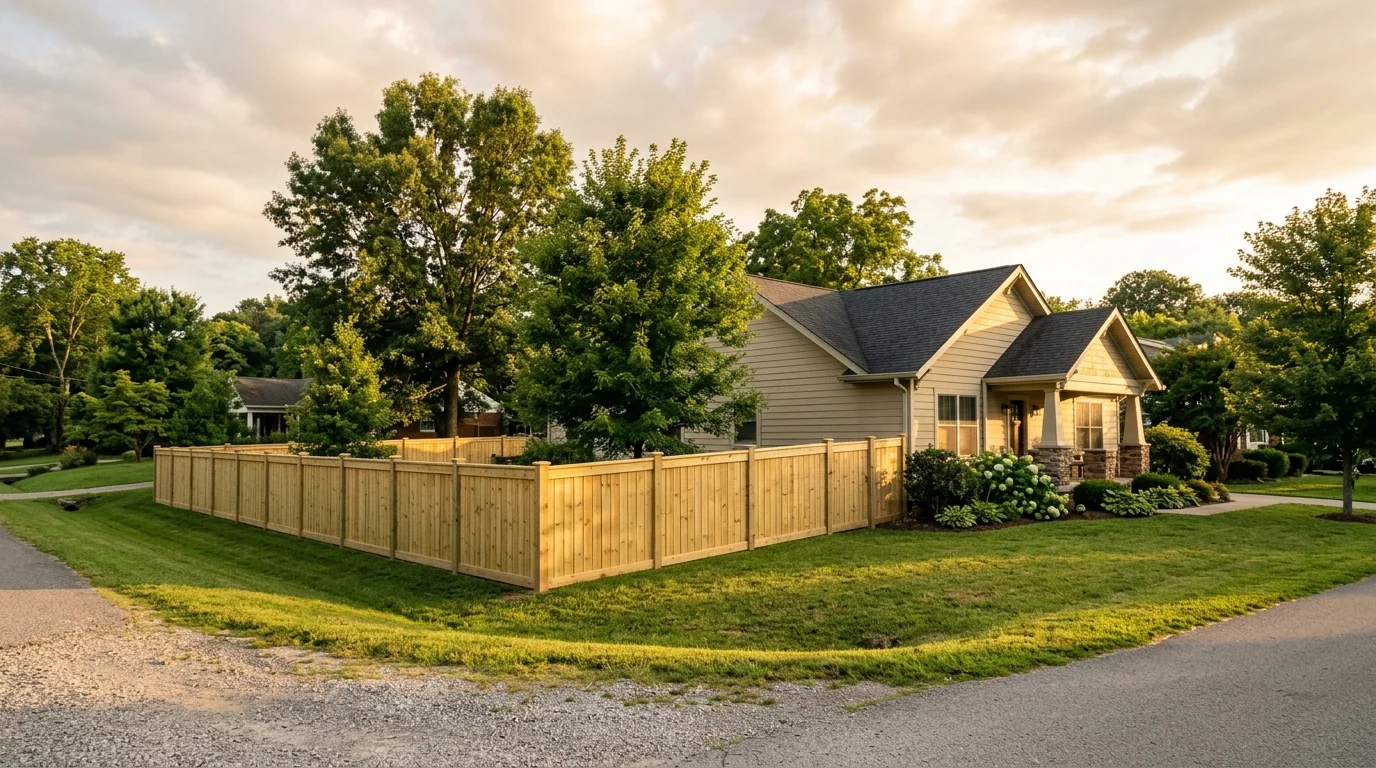
Best Fence Material for Humid Southern Climates
In humid Southern climates like Knoxville, TN, vinyl and aluminum fences outperform untreated wood on longevity with minimal maintenance. Pressure-treated Southern Yellow Pine is the most affordable option but requires regular sealing to resist rot and insects. The right choice depends on your budget, HOA rules, and how much upkeep you want to do each year.
Updated Jan 30, 2025 · 10 min read
The short answer: which fence material wins in humid Southern climates?
Vinyl is the most durable low-maintenance choice for humid Southern climates. It does not rot, does not absorb moisture, and never needs staining. Pressure-treated Southern Yellow Pine is the most popular and affordable option, but it demands regular sealing to survive repeated wet seasons. Aluminum is the top pick for ornamental or open-style fencing. The material that is best for your yard depends on three things: your budget, your HOA’s rules, and how much annual maintenance you are willing to do.
Why humidity is the main enemy of a fence
Knoxville, TN averages 47.9 inches of rain per year (NWS Morristown KMRX, 1991-2020 Climate Normals). That is enough moisture to work into wood grain, feed fungal growth, and accelerate the wet-dry shrink-swell cycles that loosen fence posts from Knox County’s clay and silty-clay soils (USDA Web Soil Survey, Knox County).
The result is a climate where the wrong material or improper installation can cut a fence’s lifespan in half.
Material-by-material comparison
| Material | Typical Installed Cost (per linear foot) | Expected Lifespan | Maintenance Level | Best For |
|---|---|---|---|---|
| Pressure-treated wood | $27-$60 | 15-20 years with sealing | Moderate (seal every 2-3 yrs) | Privacy, pets, budget-conscious buyers |
| Vinyl (PVC) | $15-$40 | 20-30 years | Low (rinse annually) | Low-maintenance privacy, dogs |
| Aluminum ornamental | $17-$90 | 30+ years | Very low (inspect annually) | HOA communities, boundary definition |
| Chain-link | $15-$30 | 15-20 years | Low | Pet containment, utility |
Cost ranges sourced from Bob Vila’s fence installation cost guide and Bob Vila’s vinyl fence cost guide.
Pressure-treated Southern Yellow Pine: the Knoxville default
Pressure-treated Southern Yellow Pine is the most common residential fence material in Knox County, and for good reason. It is widely available, less expensive than vinyl up front, and easy to repair. A single damaged board can be replaced in an afternoon without factory-matched parts.
The tradeoff is maintenance. In Knoxville’s humid climate, unsealed pine begins to gray and check (develop surface cracks) within one to two seasons. Once checks open up, moisture penetrates to the core, and rot follows, starting at the ground-contact section of each post. Applying a penetrating oil-based stain every two to three years is not optional here; it is what separates a 20-year fence from a 10-year fence.
Knoxville’s ridge-and-valley terrain also means some lots have shallow bedrock near the surface. If your yard sits on a ridge position, post-setting may require rock augering, which affects both cost and post-depth. Standard 30-to-36-inch post setting works for most valley-floor lots.
For a full breakdown of what wood fence installation typically costs, the fence cost guide covers material and labor ranges by style.
Vinyl: the best fence for dogs and low-maintenance households
Vinyl is the best fence for dogs in humid climates. The panels are solid, with no gaps large enough for a medium or large dog to push through. The material does not absorb moisture, so it will not rot at the base even when Knox County clay stays saturated after heavy rain. There is no need to treat it with stain or sealant, which matters for busy families who do not want annual maintenance on their calendar.
The main drawback is upfront cost. At $15-$40 per linear foot installed (Bob Vila), a vinyl privacy fence runs more than comparable wood. White and light-colored vinyl can develop algae staining over a humid Tennessee summer, but a garden hose rinse or low-pressure wash handles it easily.
Vinyl panels can also crack under sharp impacts, such as a fallen tree limb, rather than bending. When a section breaks, you need a panel that matches the original profile exactly. That matters if you are buying in a growing neighborhood where a particular manufacturer’s profile may not be available in five years.
Aluminum: the HOA-friendly ornamental choice
Aluminum is the preferred material in West Knoxville’s HOA-dense communities, particularly in Farragut, Northshore, and Choto. The powder-coat finish resists rust and holds color through years of humidity without any refinishing. Many HOA covenants in these neighborhoods specifically call for ornamental metal over wood or vinyl, and aluminum meets that requirement at a lower price point than wrought iron.
Aluminum’s limitation in a humid climate is that it is an open-style fence. It defines a boundary and keeps larger pets in, but it does not block wind, sightlines, or foot traffic the way a solid panel does. If privacy is the goal, vinyl or wood are better fits. If you are in Farragut and your covenants require a specific style, the fence installation services page covers the styles available for local HOA compliance.
What is the best fence for dogs in Knoxville specifically?
The best fence for dogs in Knoxville is a 6-foot vinyl privacy fence for most homeowners, or a pressure-treated wood privacy fence for those who prefer lower upfront cost and are comfortable with maintenance. Either choice can meet the 6-foot maximum that most Knox County HOA covenants allow.
A few Knoxville-specific details to keep in mind:
- If you live in the City of Knoxville or unincorporated Knox County, fences over 6 feet require a permit. Permit fees typically run $40 to $90 (Knox County Codes Administration and Inspections).
- The Town of Farragut has separate and stricter fence design-review requirements. Check with Farragut Community Development before you order materials.
- Corner lots in West Knoxville planned communities face additional setback rules that differ between city and county jurisdiction. Confirm your setback before marking post locations.
- Pool barrier fencing must meet IRC requirements: minimum 48 inches high with a self-latching gate, per CPSC pool barrier guidelines.
The ice-loading factor most guides ignore
Most national fence guides focus on wind and rain but miss ice loading, which is a real seasonal concern in Knoxville. The city sits at roughly 900 feet elevation in the Ridge and Valley province, and winter ice storms add significant weight to fence panels and any vegetation growing on or against the fence. Wood privacy fences and chain-link fences with climbing vines are most vulnerable. After the September 2024 remnants of Hurricane Helene caused widespread tree and fence damage across Knox County from saturation and wind, many homeowners also discovered how quickly a compromised post gives way when surrounding soil is fully saturated.
If your yard has mature trees overhanging the fence line, factor in the cost of trimming those branches before installation, not after a winter storm drops them on a new fence panel.
What does this mean for your project?
Choosing a material is the first decision, but installation quality matters just as much in a humid climate. A vinyl panel on a poorly set post will fail just as fast as the cheapest untreated pine. Posts need to be set at the correct depth, with drainage gravel at the base to keep standing water from accelerating ground-contact decay.
If you are comparing staining and maintenance costs over time versus a higher upfront vinyl investment, the fence cost guide has the installed cost ranges by material to help you run that comparison.
When you are ready to get specific numbers for your yard and location, request a fence installation quote to get a local estimate based on your actual linear footage, gate count, and terrain.
And if an existing fence is showing early signs of rot, leaning posts, or storm damage, a repair may extend the life of what you have. The fence repair page covers what is worth fixing versus what signals it is time to replace the full run.
For more guides on fence planning in the Knoxville metro, visit the fence installation learning hub.
topic: Best Fence Material for Humid Southern Climates topicSlug: best-fence-material-humid-climate isProcedural: false label: Education seo: title: Best Fence Material for Humid Climates | Knoxville TN description: ‘Wood, vinyl, or aluminum: which fence holds up best in Knoxville’‘s humid climate? Compare durability, cost, and maintenance before you buy.’ ogImage: /images/best-fence-material-humid-climate-og.webp summary: >- In humid Southern climates like Knoxville, TN, vinyl and aluminum fences outperform untreated wood on longevity with minimal maintenance. Pressure-treated Southern Yellow Pine is the most affordable option but requires regular sealing to resist rot and insects. The right choice depends on your budget, HOA rules, and how much upkeep you want to do each year. faqs:
- question: What is the best fence for dogs in a humid climate like Knoxville? answer: >- Vinyl privacy fencing is the best fence for dogs in humid climates. It resists rot and insects, has no gaps a dog can squeeze through, and needs no staining or sealing. Pressure-treated wood is a cheaper alternative that works well when properly sealed. Both options can be installed at the 6-foot height most Knox County HOAs allow.
- question: How long does a wood fence last in Knoxville, TN? answer: >- A pressure-treated Southern Yellow Pine fence in Knoxville typically lasts 15 to 20 years with regular staining or sealing every 2 to 3 years. Knoxville averages 47.9 inches of rain annually (NWS Morristown KMRX), and the wet-dry shrink-swell cycles in Knox County clay soils accelerate post rot if wood is left unsealed.
- question: Does vinyl fencing hold up in humidity and heat? answer: >- Yes. Vinyl does not absorb moisture, so it will not rot, warp, or support mold growth the way untreated wood can. It handles Knoxville summers well, though lighter colors can show discoloration from algae over time. A periodic rinse with a garden hose or light pressure wash keeps vinyl looking clean without chemical treatments.
- question: Is aluminum fencing a good choice for Knoxville yards? answer: >- Aluminum is an excellent low-maintenance option for Knoxville, especially in West Knox HOA communities like Farragut and Northshore where ornamental styles are popular. It will not rust in humid conditions and the powder-coat finish holds up well. It is an open-style fence, so it works better for boundary definition than privacy or pet containment.
- question: Do I need a permit for a fence in Knoxville or Knox County? answer: >- Permit requirements depend on location. The City of Knoxville and unincorporated Knox County both require permits for fences over 6 feet. The Town of Farragut has stricter design-review requirements for any fence. Typical permit fees run $40 to $90. Always check with the relevant authority before installation to avoid fines or forced removal.
- question: Does wood staining help a fence survive Knoxville humidity? answer: >- Yes, staining or sealing is the single most effective way to extend a wood fence’‘s life in humid climates. A penetrating oil-based stain repels moisture, slows UV graying, and discourages fungal growth. Knoxville’’s clay-heavy soils stay damp after rain, so ground-contact posts are the first point of failure and benefit most from treated wood and proper drainage gravel at the base.
- question: What fence material is easiest to repair after storm damage in Knoxville? answer: >- Wood is the easiest material to repair after storm damage. Individual boards or a single post can be replaced without special tools or factory-matched parts. Vinyl panels can crack rather than bend in impacts, and replacement panels must match the original profile exactly. Aluminum sections can be swapped out but require compatible rail stock. For Knoxville storm damage repairs, review your fence repair options. dateModified: 2025-01-30 dataMode: A draft: false noindex: false gateStatus: ai_writing: pass external_cites: pass internal_links: pass faq: pass uniqueness: pass gateNotes: Generated by scaffold_brand pipeline. Subject to PR review. heroImage: src: /images/best-fence-material-humid-climate-hero.webp alt: Vinyl privacy fence in a backyard in Knoxville TN on a humid summer day
Free written quote
Planning a fence? Get a free quote.
On-site measure and a written quote within 24 hours. No obligation.
Questions
Best Fence Material for Humid Southern Climates FAQs
What is the best fence for dogs in a humid climate like Knoxville?
How long does a wood fence last in Knoxville, TN?
Does vinyl fencing hold up in humidity and heat?
Is aluminum fencing a good choice for Knoxville yards?
Do I need a permit for a fence in Knoxville or Knox County?
Does wood staining help a fence survive Knoxville humidity?
What fence material is easiest to repair after storm damage in Knoxville?
Free quote
Talk to a Knoxville fencing pro
On-site measure and a written quote within 24 hours. No obligation.