Service area · Tennessee
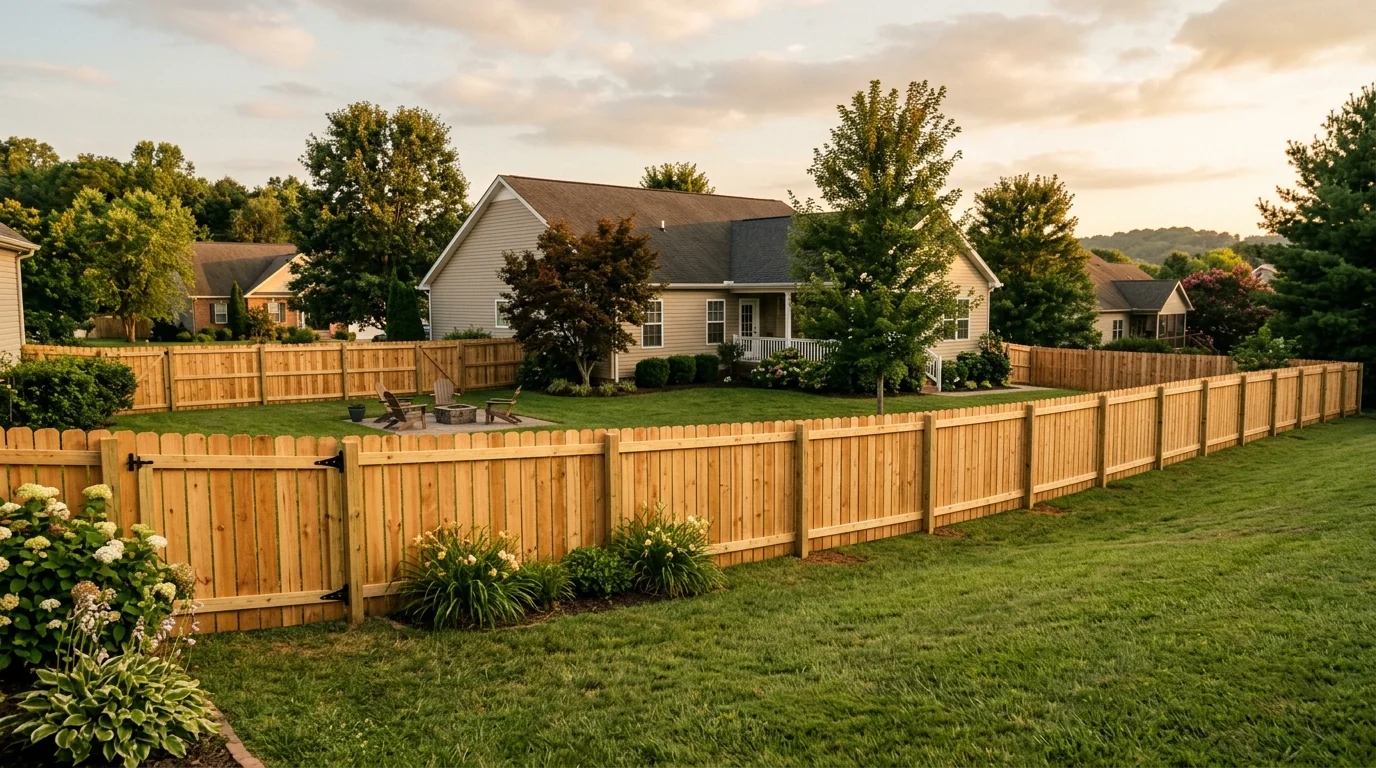
Fence installation in Powell
Powell is a fast-growing census-designated place in Knox County, just north of Knoxville along the Emory Road corridor. Sloped lots, silt loam soils, and a suburban housing mix create specific demands for fence post depth and material choice. Local contractors who know the terrain deliver better results than crews unfamiliar with the area.
Typical foundation type: mixed
Why Powell Fence Installation Is Different
Powell sits in a narrow band of Knox County terrain where suburban growth has moved quickly over the past two decades. The community, formerly known as Powell Station, stretches along the Emory Road corridor north of Knoxville and draws families who want more land than the city core offers without giving up access to I-75 or I-275. That combination of rapid residential build-out, rolling topography, and specific soil types creates fence installation conditions that differ meaningfully from flat-lot urban work. Contractors who treat every Knox County job the same way tend to underperform here.
Soil and Geology in Powell
The dominant soil series mapped across Powell by USGS SSURGO via Soil Data Access include Dewey silt loam on 6-to-15-percent eroded slopes, Emory silt loam on gentler 2-to-5-percent gradients, and a Fullerton-Udorthents-Urban land complex on 2-to-12-percent slopes where development has disturbed the natural profile. Each of these presents different challenges for fence posts.
Silt loam soils hold moisture well, which benefits plant growth but creates freeze-thaw heaving risks in winter and shrink-swell movement during summer dry spells. Posts set without adequate concrete collars in silt loam can migrate over several seasons, producing the leaning-post look common on older Powell fences. On Dewey silt loam slopes, water moves laterally through the soil profile, which adds lateral pressure against posts on hillside runs. The Fullerton-Udorthents-Urban complex, common in recently subdivided areas, mixes disturbed fill with native clay, making post depth predictions less reliable without a site-specific assessment.
Climate Considerations
Powell falls within the broader Knoxville metro climate pattern: hot, humid summers and mild but occasionally hard winters. The Tennessee Valley’s geography means the area receives periodic ice storms rather than consistent snowfall, and those ice events load fence panels and gates with sudden weight. Moisture is the dominant material enemy here. Wood fences that are not properly sealed or that use non-pressure-treated lumber at the post base show rot and splitting within a few years. Vinyl holds up better through wet seasons but expands and contracts with temperature swings, so panel gaps matter at installation. Wikipedia’s entry on Powell, Tennessee confirms the community sits within the Knoxville Metropolitan Statistical Area, meaning it shares the valley’s characteristic weather patterns without meaningful elevation variation to moderate them.
Housing Era and Lot Patterns
Powell’s housing stock reflects multiple build waves. Older sections near the original Powell Station crossroads carry homes from the mid-twentieth century, often on larger lots with mature tree canopies. Roots from those trees complicate post placement and routing. The areas along Emory Road and Copper Ridge show significant late-1990s and 2000s subdivision development, with tighter lot spacing, HOA covenants, and fence height or material restrictions. The newest pockets, filling in along secondary roads, involve fresh grading where the disturbed soil profile requires extra attention to post compaction. Understanding which era of construction a given lot sits in changes the approach to material selection, post depth, and gate placement.
Powell Neighborhoods and Fence Patterns
Powell’s residential areas vary enough in age, lot size, and soil condition that neighborhood-level awareness shapes good installation decisions.
- Emory Road Corridor. The main residential spine of Powell. Newer subdivisions with tighter lot lines and active HOA guidelines on fence height and material. Vinyl privacy panels are common here.
- Clinton Highway Frontage. Older commercial-residential mix with larger lots. Many existing wood fences are aging and due for replacement rather than repair.
- Norris Freeway Area. Growing residential zone with mixed terrain. Dewey silt loam slopes appear frequently, increasing the need for deeper post settings.
- Powell Station District. The historic community core. Homes here are older, lots are irregular, and tree root interference is the most common installation complication.
- Copper Ridge. Mid-2000s subdivision development. More uniform lot grading but fill soil beneath shallow topsoil makes post compaction testing worthwhile.
- Callahan Drive Area. Transitional zone between older rural character and newer residential. Larger yard perimeters mean more linear footage per project.
- Andersonville Road Communities. Rural-residential character with larger parcels. Split-rail and farm-style fencing appear alongside privacy wood panels.
- Cross Anchor Road Neighborhoods. Newer residential pockets with active growth. Freshly graded lots require settling allowances in post depth planning.
How to Find a Powell Fence Installation Contractor
Choosing a fence contractor in Powell requires more than price comparison. The soil and terrain conditions described above mean that installation technique matters as much as material quality.
Warranty terms tied to post performance. A contractor confident in their installation method offers a post-and-panel warranty that covers leaning or settling, not just material defects. Ask whether the warranty addresses post migration in silt loam soil specifically. Vague language like “installation guaranteed” without defining what constitutes a failure protects the contractor, not the homeowner.
Demonstrated local-experience specificity. Ask contractors to name the soil types they encounter most in Powell or describe how they adjust post depth on Dewey silt loam slopes. A crew that has worked the Emory Road corridor knows the difference between installing on a freshly graded Copper Ridge lot versus a mature Powell Station yard with root interference. General answers signal inexperience with this specific market.
Diagnostic discipline before quoting. Good contractors walk the full fence line before quoting, not just the front yard. They note grade changes, drainage patterns, buried utilities (Knox County’s 811 call-before-you-dig requirement applies), and tree root proximity. A quote produced from satellite imagery alone or a quick driveway conversation is likely to miss terrain complications that show up as change-order charges after work begins.
Clear materials documentation. Powell’s mix of HOA communities and non-HOA lots means some homeowners face material restrictions. A reliable contractor asks about HOA covenants before specifying materials, provides the lumber treatment grade for wood posts (ground-contact rated pressure-treated is the minimum standard), and explains panel-to-panel gap tolerances for vinyl in temperature-variable conditions. The American Fence Association’s industry standards provide the baseline reference contractors should be working from.
What to Expect from a Powell Fence Inspection
A thorough pre-installation inspection in Powell covers four distinct areas. Skipping any of them creates risk.
Exterior walk-around and line verification. The technician walks the proposed fence line with the homeowner, identifying property corners and confirming boundary locations against the plat. This step catches encroachment risks before posts go in. Questions about shared fence lines with neighbors should be resolved at this stage. Nolo’s guide on fences and boundary disputes covers homeowner rights on shared boundaries and is worth reviewing before the inspection.
Terrain and slope assessment. On Powell’s Dewey silt loam slopes, the inspector notes grade change per linear foot across the proposed fence run. This determines whether a stepped or racked panel design is appropriate and where posts need deeper footings. Slope also affects drainage around post bases, which is a primary driver of post-base rot in wood installations.
Soil condition evaluation. In fill-heavy areas like Copper Ridge or newly developed cross-road lots, probing the soil at proposed post locations identifies loose fill that needs compaction or that requires longer posts to reach stable native soil. Silt loam in wetter areas shows plasticity that a gloved probe test can identify before a post goes in.
Utility and obstruction identification. Knox County requires an 811 dig-safe call before any ground disturbance. The inspector confirms this has been or will be completed and notes above-ground obstructions like overhead utility lines, downspout drainage paths, and established tree roots that affect post placement. Gate positioning relative to drainage flow is also flagged at this stage.
Repair Methods and Material Options Used Most in Powell
Powell’s residential character favors privacy-first fencing in wood and vinyl, with chain-link appearing in utilitarian applications. The following options appear most frequently in this market, ordered by installation volume.
-
Wood privacy fence. The dominant choice in Powell subdivisions and older neighborhoods alike. According to Bob Vila’s wood fence cost guide, privacy wood fencing runs $27 to $60 per linear foot installed. Cedar and pressure-treated pine are the standard species. See the wood fence installation options for Knoxville-area homes for a full breakdown of species and board configurations.
-
Vinyl privacy fence. Growing in share among newer HOA communities where low maintenance is a covenant or personal preference. Bob Vila’s vinyl fence cost guide puts the cost at $15 to $40 per linear foot, with a national project average of $4,045. Vinyl holds color without repainting and resists moisture rot, which matters in Powell’s humid summers. Review vinyl fence installation details for the Knoxville area for panel configurations and post-setting guidance.
-
Chain-link fence. Common in rear-yard pet enclosures and utility areas. Per Bob Vila’s fence installation cost guide, chain-link runs $15 to $30 per linear foot installed. It is not a privacy solution but performs well on sloped terrain where rigid panel systems require complex stair-stepping.
-
Aluminum fence. Used in decorative front-yard applications and pool surrounds. Bob Vila places aluminum at $17 to $90 per linear foot depending on style and height. Pool fence installations must meet CPSC safety barrier guidelines requiring a minimum 48-inch barrier height and self-closing, self-latching gates.
For a full cost comparison across materials, the fence cost hub covers per-linear-foot ranges and total project estimates. Homeowners ready to get numbers specific to their Powell lot can request a free on-site estimate.
Powell Building Permits and Code Authority
Powell is an unincorporated census-designated place, which means it has no independent municipal government and no city-level building department. Permitting authority rests with Knox County. The Knox County Department of Development Services administers zoning and building codes for unincorporated areas, including Powell.
Whether a fence permit is required depends on height, placement, and whether the fence is attached to or serves a structure. In Knox County, fences over a certain height threshold or those installed along front-yard setbacks often require a zoning review before approval. Pool enclosure fences carry their own permit pathway given safety barrier requirements. Homeowners should contact the Knox County Department of Development Services directly or visit the county’s online permit portal before beginning work.
Tennessee adopts the International Building Code as its state construction standard, with local amendments applied at the county level. Knox County’s code adoption follows the state framework. A contractor who pulls permits regularly in Knox County will know current requirements and can advise whether a specific project triggers the permit threshold. If a contractor recommends skipping a permit to save time, treat that as a warning sign.
Other Tennessee Communities We Serve
Powell is one of several Knox County and greater Knoxville communities where fence installation work is available. If you are searching on behalf of a property in a neighboring area, the following pages cover local conditions in those markets.
- Fence installation services in Halls, TN covers the Halls community to the northwest, where terrain and housing patterns differ from the Emory Road corridor.
- Fence installation in Karns, TN addresses another fast-growing unincorporated Knox County community with its own soil and subdivision mix.
- Knoxville fence installation covers the city core and its established neighborhoods, where older housing stock and urban lot configurations create a distinct set of installation considerations.
Homeowners across the Powell area can schedule a free inspection and written estimate to get a site-specific assessment before committing to any material or contractor.
Neighborhoods served
Powell neighborhoods
- Emory Road Corridor
- Clinton Highway Frontage
- Norris Freeway Area
- Powell Station District
- Copper Ridge
- Callahan Drive Area
- Andersonville Road Communities
- Cross Anchor Road Neighborhoods
Questions
Powell fence installation FAQs
Why do fences shift or lean so often in Powell?
How much does fence installation cost in Powell?
Do I need a building permit to install a fence in Powell?
How do I check my property lines before fencing in Powell?
What neighborhoods in Powell have the most fence installation activity?
Can I get a free inspection before committing to a fence project?
What foundation or post type is most common under Powell fences?
Free inspection
Free Powell fence estimate
On-site elevation survey, written quote within 24 hours, no obligation.