Service area · Tennessee
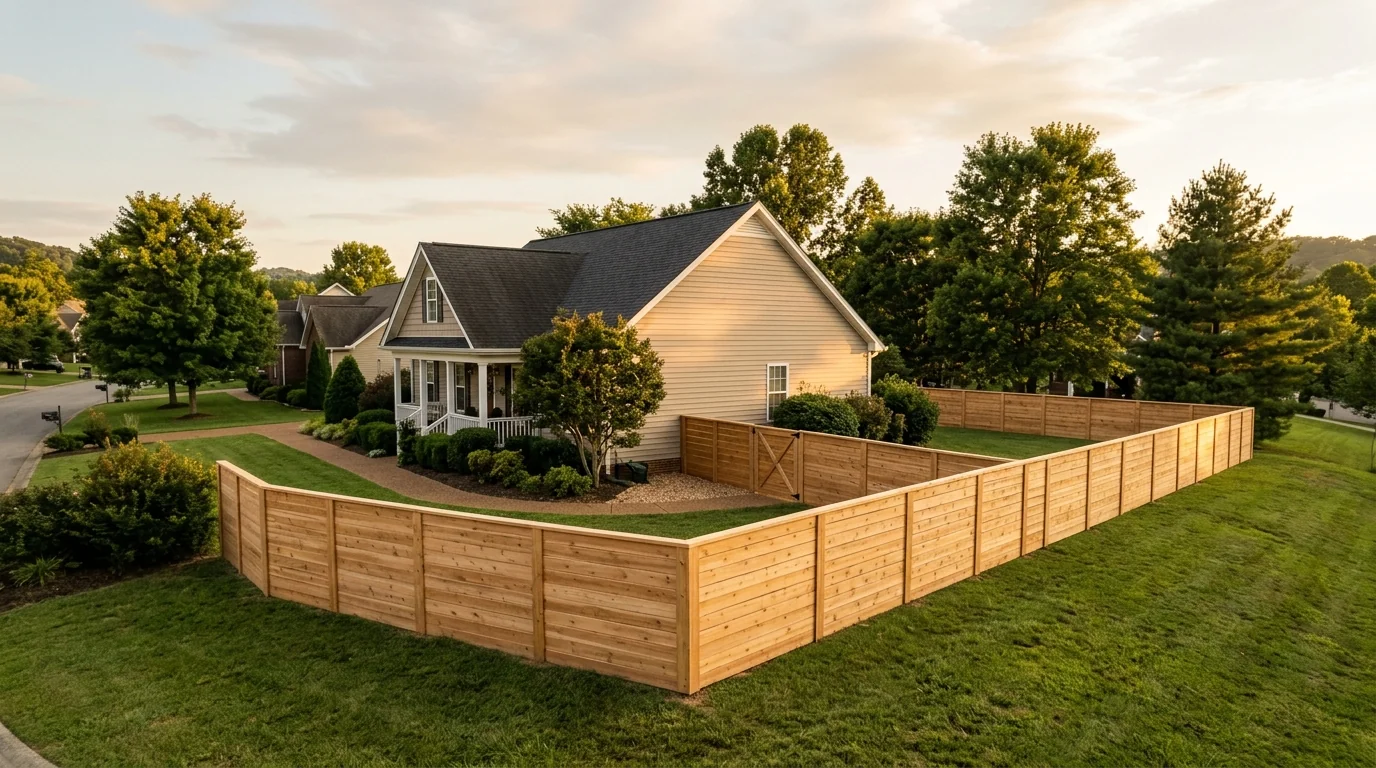
Fence installation in Eagleton Village
Eagleton Village is a census-designated place in Blount County, Tennessee, with a population of about 5,328. The community sits in hilly terrain shaped by Dewey-Collegedale gravelly silt loams on slopes up to 25 percent. Homes here often trace their origins to the World War II-era growth tied to the nearby ALCOA plant. Those conditions make fence post setting and slope management two of the most important factors in any installation project.
Typical foundation type: pier-and-beam
Why Eagleton Village Fence Installation Is Different
Eagleton Village sits in the rolling terrain of Blount County, Tennessee, tucked into the Knoxville metropolitan area about six miles southwest of downtown Maryville. The community takes its name from David Eagleton, a Scottish immigrant who donated the land for the area’s first school in the 1800s. Modern urbanization here accelerated during World War II when workers flooded into the area to staff the nearby ALCOA aluminum plant. That history shaped the housing stock and the lots on which those homes sit. Fence contractors who treat Eagleton Village like a flat suburban grid tend to produce work that shifts, sags, or fails within a few seasons.
Soil and Geology in Eagleton Village
The USGS SSURGO dataset via USDA Soil Data Access identifies the dominant soils here as Dewey-Collegedale complex and Dewey-Collegedale gravelly silt loams, appearing in two slope categories: 6 to 15 percent and 15 to 25 percent. Both series are described as severely eroded in places. Gravelly silt loams drain relatively quickly but shift as surface erosion removes fine particles from around post footings over time. On the steeper 15 to 25 percent slopes, that erosion risk is compounded by gravity-assisted soil creep.
Posts set without sufficient depth in this soil type will gradually tilt toward the downhill side of a lot, pulling panel frames out of alignment. A contractor who understands Dewey-Collegedale behavior will specify deeper footings and wider concrete collars than a standard flat-lot installation would require. This Old House recommends setting posts at least three feet deep to clear the frost line, and Blount County’s terrain often warrants going deeper still to reach stable material below the erosion zone.
Climate Considerations for Blount County Fences
The Knoxville metro sits in a humid subtropical climate zone. Summers bring heat and high moisture content in the air, which accelerates wood rot and warps improperly treated lumber. The region sees enough freezing events each winter to produce frost-heave stress on shallow footings, though the season is shorter than in more northern parts of Tennessee. Wood fence buyers in Eagleton Village should expect to maintain staining or sealing on a regular cycle, or consider pressure-treated wood and vinyl alternatives that tolerate moisture swings without degrading as quickly. The outdoor lifestyle culture common throughout the Knoxville region means fenced yards get heavy year-round use, so material durability matters more than it might in drier climates.
Housing Era and Lot Patterns
As Wikipedia notes, urbanization in Eagleton Village began during World War II, driven by ALCOA plant employment. That origin means a significant portion of the housing stock predates modern zoning setback conventions and subdivision layout standards. Lots are irregular in shape, property corners are not always clearly marked, and the transition from wartime housing blocks to post-2000 infill development creates a patchwork of lot sizes and configurations. Homeowners who skip a survey before installation risk setting a fence on a neighbor’s property or inside their own setback. The slope conditions described above compound the challenge because contractors must account for grade changes across a lot that may have been subdivided or modified multiple times over the past 80 years.
Eagleton Village Neighborhoods and Fencing Patterns
- Eagleton Village core CDP area. The densest residential concentration. Lots tend to be moderate-sized with mid-century bungalow and ranch-style homes. Wood privacy fencing is the most common choice for backyard enclosure.
- ALCOA-era residential blocks. Housing nearest the original plant corridor dates to the 1940s and 1950s. Lots often have minimal grade changes near the street but drop sharply toward the rear. Post setting on rear fence lines requires attention to slope differential.
- South Blount County suburban streets. Newer streets developed in the 1980s through 2000s with more consistent lot layouts. Vinyl and aluminum fencing appear frequently here, particularly around pools and patio areas.
- Rural transition lots along the western CDP boundary. Larger parcels that abut agricultural land. Split-rail and farm-style wood fencing is common on these lots, where the primary purpose is boundary definition rather than privacy.
- Newer infill streets developed post-2000. Smaller footprints but steeper terrain in some cases. HOA guidelines, where they exist, often specify material and height. Confirm HOA status before ordering materials.
- Hillside residential pockets on steeper terrain. Lots exceeding 15 percent grade require stepped or racked panel installations. These projects take longer and cost more per linear foot than flat-lot work.
- Lower-gradient lots near community access roads. Properties closer to the flatter valley corridors offer more straightforward installations and suit standard panel heights without major framing adjustments.
- Mixed residential and light commercial frontage areas. Aluminum and chain-link fencing appear on these boundary lots, often for security or liability separation rather than aesthetics.
How to Find an Eagleton Village Fence Installation Contractor
Not every contractor who works in the Knoxville metro has hands-on experience with Blount County terrain. Asking the right questions before signing a contract separates capable installers from those who will deliver a flat-lot installation on a sloped site.
Warranty terms that address slope and soil movement. A contractor confident in their post-setting method on sloped terrain will back that work with a written warranty covering leaning or shifting posts. Vague warranties that exclude “acts of nature” or “soil conditions” signal that the installer knows these factors are risks they don’t want to own. Ask specifically whether slope-related movement is covered.
Specific local-experience references. Ask for the addresses of two or three completed projects on sloped Blount County lots. A contractor who can provide that list has done this work before. One who redirects to general customer satisfaction reviews has probably not dealt with Dewey-Collegedale soils at scale.
A clear scope of work for grade adjustments. Before a quote becomes a contract, it should specify whether panels will be stepped (producing a staircase profile) or racked (angled to follow the slope continuously). Each approach has cost implications and aesthetic differences. If the quote does not address this, the contractor has not assessed your lot properly.
Diagnostic discipline before pricing. A contractor who quotes a linear-foot price without walking the perimeter has not done enough site assessment for an Eagleton Village lot. The erosion-prone soils and irregular lot configurations here require a physical inspection before accurate pricing is possible. Request a free on-site fence inspection and be cautious of any firm that refuses to visit the site before quoting.
What to Expect from an Eagleton Village Fence Inspection
A thorough pre-installation inspection on an Eagleton Village property covers four distinct areas.
Exterior perimeter walk. The inspector measures the total linear footage and notes grade changes along each fence line. On lots with Dewey-Collegedale soils on 15 to 25 percent slopes, this step identifies where soil erosion is already active and where posts will need deeper footings. Property pins or survey markers are located, or the homeowner is advised to obtain a survey before proceeding.
Interior lot assessment. The inspector checks for underground utilities, irrigation lines, and drainage paths that cross the proposed fence line. Blount County’s hilly terrain means drainage often follows unpredictable paths across lots that were graded decades ago. Cutting through a drainage swale during post installation creates water damage problems downstream.
Footing and post depth planning. Based on the slope percentage and soil series present, the inspector specifies post depth and concrete volume for each section. Sections on steeper grades get deeper posts with larger concrete collars. This step is where the flat-lot assumptions that cause premature fence failure get caught before any digging starts.
Gate placement and hardware review. Gates are the most maintenance-intensive part of any fence installation. On sloped lots, gate frames must account for the grade so the door swings freely without dragging. If the property includes a pool, gate hardware must meet the self-closing and self-latching standards described in the CPSC Safety Barrier Guidelines for Residential Pools, which specify that barriers should be at least 48 inches above grade on the side facing away from the pool.
Repair Methods Used Most Often in Eagleton Village
Eagleton Village’s combination of sloped terrain, erosion-prone soils, and a housing stock that spans eight decades produces a fairly predictable set of fence problems. The repair methods below are listed in order of how frequently they appear in Blount County communities with similar characteristics.
- Post reset and re-plumb. Leaning posts caused by soil movement are the most common repair call in hilly terrain. A contractor removes the post, excavates to fresh stable material, resets with new concrete, and re-aligns the panel frame. See the fence repair services hub for a full breakdown of what this process involves.
- Panel replacement after wood rot. Mid-century wood fences installed without pressure-treated lumber or sealed finishes often show significant rot at the base rail and lower pickets. Panel-by-panel replacement can extend the life of an otherwise sound fence frame. According to Bob Vila, wood privacy fencing runs $27 to $60 per linear foot installed.
- Concrete footing repair. Frost-heave and water infiltration can crack original concrete collars around posts, allowing movement. Removing the damaged footing and resetting with properly mixed concrete stabilizes the post without full replacement.
- Gate rehang and hardware replacement. Gates on sloped lots shift as post footings settle. Rehanging with adjustable hardware and replacing worn hinges restores function. Pool gates in particular require hardware that meets CPSC self-latching standards.
- Full fence replacement on severely eroded lines. On sections where soil erosion has removed more than a few inches of grade since original installation, a full replacement with deeper posts and re-graded footing zones is more cost-effective than repeated repairs.
For a full comparison of material costs, visit the fence installation cost guide or explore specific options like wood fence installation in the Knoxville area and vinyl fence installation near Knoxville.
Chain-link remains one of the more budget-conscious options for rural transition lots and rear-property lines. Bob Vila places chain-link at $15 to $30 per linear foot installed. Vinyl fencing, which resists the humidity-related degradation that affects wood in Blount County, runs $15 to $40 per linear foot according to Bob Vila’s vinyl fence cost guide.
Eagleton Village Building Permits
Eagleton Village is an unincorporated census-designated place. It has no independent municipal government and therefore no city-level building department. Permitting authority rests with Blount County, specifically the Blount County Building and Development Services department. Homeowners should contact that office directly to determine whether a permit is required for their specific project. The requirement typically depends on fence height, lot size, whether the property is in a flood zone, and whether any grading work is involved.
Tennessee adopts the International Residential Code (IRC) as the basis for residential construction standards statewide, and Blount County follows that framework. The IRC does not impose a universal requirement for fence permits, but local amendments can add requirements. Any fence adjacent to a swimming pool should be treated as a permitted project by default, given the safety-barrier requirements that apply under both the IRC and CPSC guidelines.
Contractors who skip the permit question on your behalf are not protecting you. If unpermitted work is flagged during a property sale or insurance claim, the cost of remediation falls on the homeowner. Confirm permit requirements before installation begins and make sure the contractor pulls any required permits in the proper name.
Other Tennessee Cities We Serve
Eagleton Village sits within a cluster of Blount County and Knox County communities that share similar terrain and housing-era characteristics. If your project spans multiple addresses or you are comparing conditions across the area, these pages cover adjacent markets:
- Fence installation in Alcoa, TN covers the incorporated city that borders Eagleton Village to the north, where the ALCOA plant history also shaped the residential landscape.
- Fence installation in Rockford, TN addresses another rural Blount County community with comparable soil and slope conditions.
- Fence installation in Seymour, TN serves the southeast Knox County corridor, where suburban growth patterns create demand for privacy and pet-containment fencing similar to Eagleton Village.
Ready to get a site-specific quote for your Eagleton Village property? Use the free fence inspection request form to schedule a perimeter walk with a contractor who knows Blount County terrain.
Neighborhoods served
Eagleton Village neighborhoods
- Eagleton Village core CDP area
- ALCOA-era residential blocks near the original plant corridor
- South Blount County suburban streets
- Rural transition lots along the western CDP boundary
- Newer infill streets developed post-2000
- Hillside residential pockets on steeper terrain
- Lower-gradient lots near community access roads
- Mixed residential and light commercial frontage areas
Questions
Eagleton Village fence installation FAQs
Why do fences on Eagleton Village lots shift or lean after a few years?
How long does fence installation typically take in Eagleton Village?
What does a wood privacy fence cost in Eagleton Village?
Do fence projects in Eagleton Village require a building permit?
What fence styles suit the older homes near the original ALCOA-era neighborhoods?
Does my Eagleton Village property qualify for a free fence inspection?
What foundation or post type works best on Eagleton Village slopes?
Free inspection
Free Eagleton Village fence estimate
On-site elevation survey, written quote within 24 hours, no obligation.