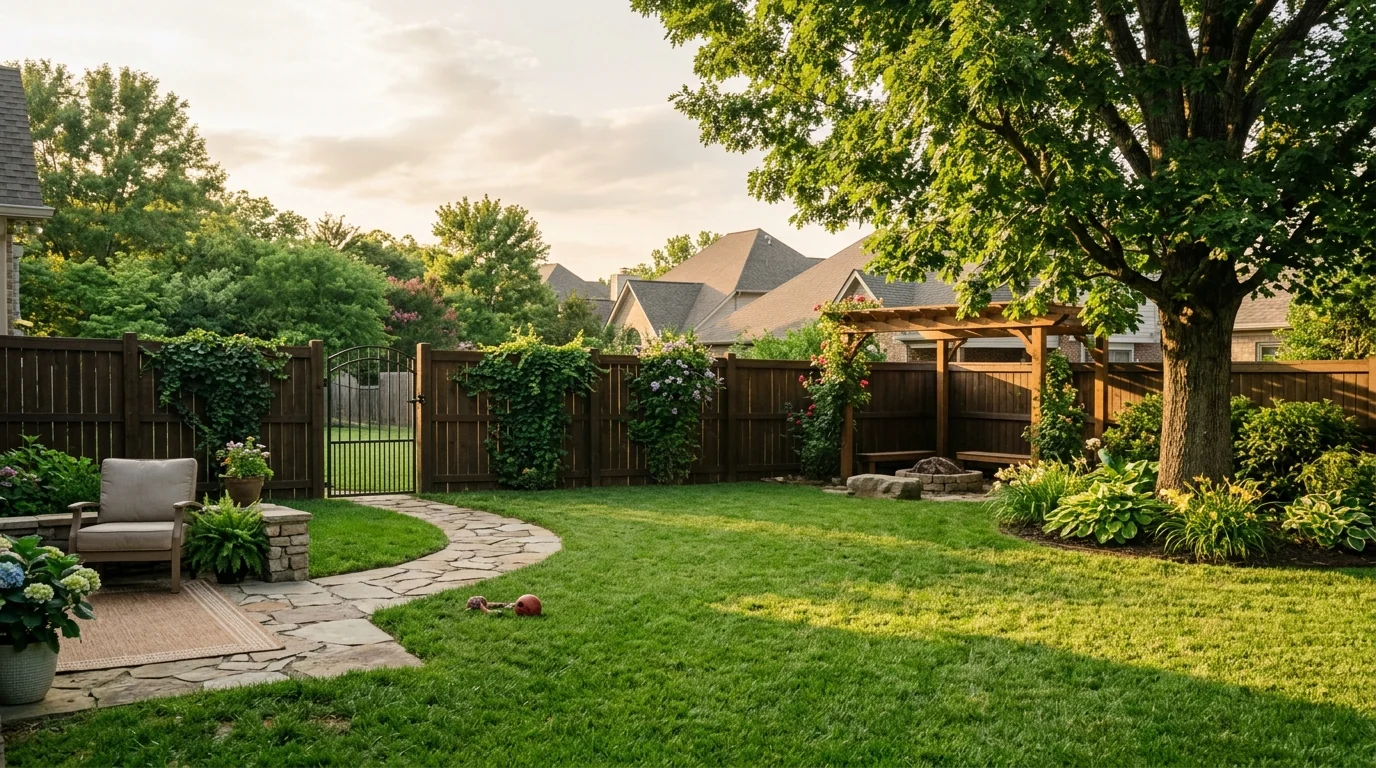
Dog fence installation: what it means and when it’s the right choice
Dog fence installation is the process of selecting, permitting, and installing a physical barrier designed specifically to contain a dog inside a defined yard area. When a homeowner in Knoxville asks about dog fence installation, the real question beneath the surface is usually: “What keeps my specific dog in this specific yard without creating a permitting headache or an HOA violation?” The answer depends on breed, lot shape, soil type, and which jurisdiction your address falls under. This page works through all of those variables so you can make a confident decision before requesting a quote.
How a dog fence works mechanically
A physical dog fence creates a closed perimeter using posts set into the ground, with infill panels or boards attached between them. Posts are typically buried to one-third of their total length. This Old House recommends digging post holes at least 3 feet deep to reach below the frost line and confirm a stable bearing layer. In Knox County, residual clay and silty limestone soils compact reliably at that depth, though ridge-position lots with shallow bedrock may require rock augering. Once posts are plumb and set, panels or boards span the openings. Gates close the entry points. The dog is physically prevented from crossing the boundary.
Conditions where a dog fence is the right answer
A physical fence is the correct choice when containment must be absolute rather than conditional. If your dog is large, athletic, pain-tolerant, or has ever pushed through an electric boundary, a solid fence is the only reliable option. It also makes sense when you have young children who need a yard that keeps strangers out as well as dogs in. Knox County’s wet-dry soil cycles (average annual rainfall of 47.9 inches per NWS Morristown KMRX climate normals) make post-depth and footing decisions important, but none of them are deal-breakers for a properly installed physical fence.
Conditions where an alternative is better
An invisible or underground fence suits situations where a physical fence is either cost-prohibitive or prohibited. Large rural lots, steep topography on East Knoxville ridge properties, or front-yard containment in a Farragut community with strict fence-design review are all cases where an invisible system may be the practical starting point. The tradeoff is real: an invisible fence does not stop other animals, solicitors, or children from entering your yard. It also requires your dog to wear a functioning collar at all times. For households where those gaps in protection matter, a physical fence remains the stronger option even at higher upfront cost. Compare the two approaches in more detail on the invisible fence installation service page for Knoxville.
Installation process for dog fence installation in Knoxville
Step 1: Site assessment and layout (Day 1 morning, 1-2 hours)
A crew member walks the property with a measuring wheel or laser measure, marking the fence line with flags. This step confirms the gate count, identifies any grade changes that need infill adjustments, and checks for underground utilities. Knox County’s karst geology rarely puts solution cavities at post depth, but the locating call (Tennessee 811) is required by law before any digging begins. The crew also confirms the fence line stays within your property, not on the neighbor’s side. Boundary disputes are a documented source of fence-related legal problems, and Nolo’s fencing and boundary dispute resources outline the neighbor-law basics that apply in Tennessee.
Step 2: Post hole digging (Day 1, 2-4 hours depending on soil)
A gas-powered auger bores holes at 8-foot intervals (standard) or closer for vinyl panels with fixed spans. In most Knox County valley-position lots, clay and silt allow clean boring to 36 inches. On West Knox ridge lots where bedrock sits near the surface, a rock-tooth auger or hand breaker extends the timeline by one to two hours per problem hole. Depth matters for dog fences in particular: an under-set post that heaves during a freeze-thaw cycle creates a gap at grade that a determined digger exploits immediately.
Step 3: Post setting and concrete pour (Day 1 afternoon)
Posts go into the holes and are braced plumb. Fast-setting concrete mix is poured dry around each post and watered in, achieving initial set within 30 to 40 minutes. This Old House recommends using a level to confirm plumb before the concrete sets. The crew checks diagonal measurements across corners to confirm the layout is square. For dog fence projects, post caps are installed at this stage to prevent water intrusion that accelerates rot in Knox County’s 47.9-inch average annual rainfall environment.
Step 4: Panel or board installation (Day 2 morning)
For wood privacy fences, boards are nailed or screwed to horizontal rails already attached to the posts. For vinyl, pre-built panels slide into routed post channels. For aluminum, individual pickets insert into top and bottom rails. The crew works from one corner to the next, maintaining consistent spacing and checking for plumb as they go. Dog fence builds often require tighter board-to-board spacing or a solid bottom rail to eliminate gaps a small dog can push through.
Step 5: Gate installation and hardware (Day 2 midday)
Gates get double posts on each side to carry the swing weight without pulling the latch post out of plumb over time. Hardware includes a spring closer, a gravity latch, and a cane bolt on double gates. For projects where the fence also functions as a pool barrier, the U.S. Consumer Product Safety Commission requires gates to be self-closing and self-latching, with the latch on the pool side and at least 54 inches from the ground or enclosed in a child-resistant shroud. The crew confirms gate swing direction and that latches engage without manual adjustment.
Step 6: Final walk and cleanup (Day 2 afternoon)
The crew walks the entire perimeter at dog level, looking for gaps at grade, loose boards, or hardware that needs tightening. Soil is backfilled around any disturbed areas. Concrete blowout is removed from post bases. Scrap material is loaded out. Most Knox County residential dog fence projects of 150 to 200 linear feet finish within two days.
Dog fence installation vs. invisible fence installation
The comparison between physical and invisible dog fences comes down to one question: do you need containment, or do you need a boundary?
An invisible fence trains a dog to stop at an underground wire boundary using static correction from a collar receiver. Installation is faster and the cost per linear foot is lower. But the system depends entirely on the dog’s willingness to respond to the correction. High-drive breeds, dogs in prey drive, and pain-tolerant dogs routinely push through the signal and then refuse to re-enter the yard because crossing back means another correction. That creates a situation where your dog is loose and unable to come home.
A physical fence stops the dog regardless of motivation. It also stops neighbors’ dogs, wildlife, and strangers from entering the yard. For Knox County families with young children or multiple dogs, those secondary benefits are not minor.
The invisible fence has genuine advantages in specific situations. It works on large rural lots where the linear footage of physical fencing would be cost-prohibitive. It works in Farragut and Northshore communities where HOA design standards prohibit visible fencing in front yards. And it works for owners who want a boundary that does not interrupt sightlines on a lakefront lot along the Choto area of West Knox County.
The honest framing is that physical and invisible fences solve different problems. If your primary goal is reliable, round-the-clock containment that does not depend on a charged collar, the physical fence wins. If your primary goal is a low-cost perimeter on a large lot where the dog is well-trained and supervised, the invisible fence is worth considering. See how fence repair for dog damage and post failure compares when evaluating long-term maintenance for either approach.
Dog fence installation cost in Knoxville, TN
According to Bob Vila’s fence installation cost guide, fence installation costs between $13 and $25 per linear foot on average nationally, with the overall project average landing between $1,743 and $4,431. For Knox County, the typical dog fence project runs 150 to 200 linear feet, putting the baseline range at roughly $1,900 to $5,800 depending on material and configuration.
The variables that move the number locally include:
Material choice. Pressure-treated Southern Yellow Pine, the most common choice in Knox County residential builds, falls toward the lower end of the cost range. Vinyl runs higher. Aluminum ornamental picket fencing (popular in Farragut and Northshore HOA communities) sits at the top of the range.
Post depth and soil conditions. Most valley-position lots in Knox County auger cleanly. Ridge lots with shallow limestone bedrock add equipment time and, in some cases, require specialized drill bits or hand-breaking. That labor adds $10 to $30 per affected post depending on depth.
Gate count and hardware. Each gate adds $150 to $400 to the project depending on size and hardware grade. A standard backyard dog fence with one walk gate and one drive gate sits in the middle of that range. Pool-barrier-compliant self-latching hardware adds a modest premium.
Access. Narrow side yards, steep grades, or an existing partial fence that needs demo before the new build all extend labor time.
For detailed cost breakdowns specific to each material, see the dog fence installation cost guide for Knoxville.
Warranty and transferability
Warranty coverage for a dog fence depends on two separate components: the material warranty from the manufacturer and the labor warranty from the installer.
For pressure-treated Southern Yellow Pine, manufacturer treatment warranties typically cover rot and termite damage for 15 years when the wood is used above-ground (as fence boards are). The treatment warranty does not cover weathering, checking, or cosmetic surface changes that are normal for exposed wood.
Vinyl fence manufacturers in the residential market commonly offer 20 to 25-year limited warranties, and some offer lifetime coverage on the product itself. The key question is whether the warranty transfers to a new owner if you sell the home, and whether the installer voids it by using third-party fasteners or modifying panels in the field.
Aluminum ornamental fences typically carry lifetime limited warranties from the manufacturer against rust-through and paint peeling under normal conditions.
When evaluating a contractor’s labor warranty, ask specifically: how long does the installer guarantee posts against heaving or leaning, and what constitutes a warranty call versus normal settling? In Knox County’s moderate shrink-swell clay, minor post movement in the first year is common. A warranty that covers post-plumb correction for at least two years protects you through the first full wet-dry cycle.
Permits and engineering in Knoxville, TN
Permit requirements for dog fence installation in Knox County depend on which jurisdiction your address falls under.
In the City of Knoxville, a permit is required for fences over 6 feet in height and for any fence in a designated overlay district or historic district. Most residential dog fences at 4 to 6 feet do not trigger the permit threshold inside city limits, but overlay-district rules apply regardless of height in certain neighborhoods. Contact the City of Knoxville Plans Review and Inspections office to confirm your parcel’s overlay status before starting work.
In unincorporated Knox County, the same 6-foot threshold applies. Fences at or under 6 feet generally do not require a permit. Contact Knox County Codes Administration and Inspections for confirmation. Typical permit fees across both jurisdictions run $40 to $90.
The Town of Farragut is a separate and notably stricter case. Farragut has its own fence ordinance and design-review process that applies regardless of height. Material restrictions, color requirements, and front-yard setback rules go beyond what typical Knox County HOA covenants require. If your address is in Farragut, contact the Town of Farragut Community Development office before selecting materials or hiring a contractor.
For pool-adjacent dog fences, engineering review is rarely required on standard residential projects, but the fence must meet IRC pool-barrier standards as confirmed by a final inspection. The CPSC’s safety barrier guidelines state the barrier must reach at least 48 inches above grade on the pool-facing side, with no horizontal rails or openings that a child could use to climb.
If you are ready to describe your yard and get a project estimate, the Knoxville fence installation quote form takes about three minutes to complete and routes directly to a local crew.
For homeowners comparing all fencing options serving the Knoxville area, the Knoxville fence installation service area page covers the full range of materials, neighborhoods, and timelines available in the Knox County market.