Service area · Tennessee
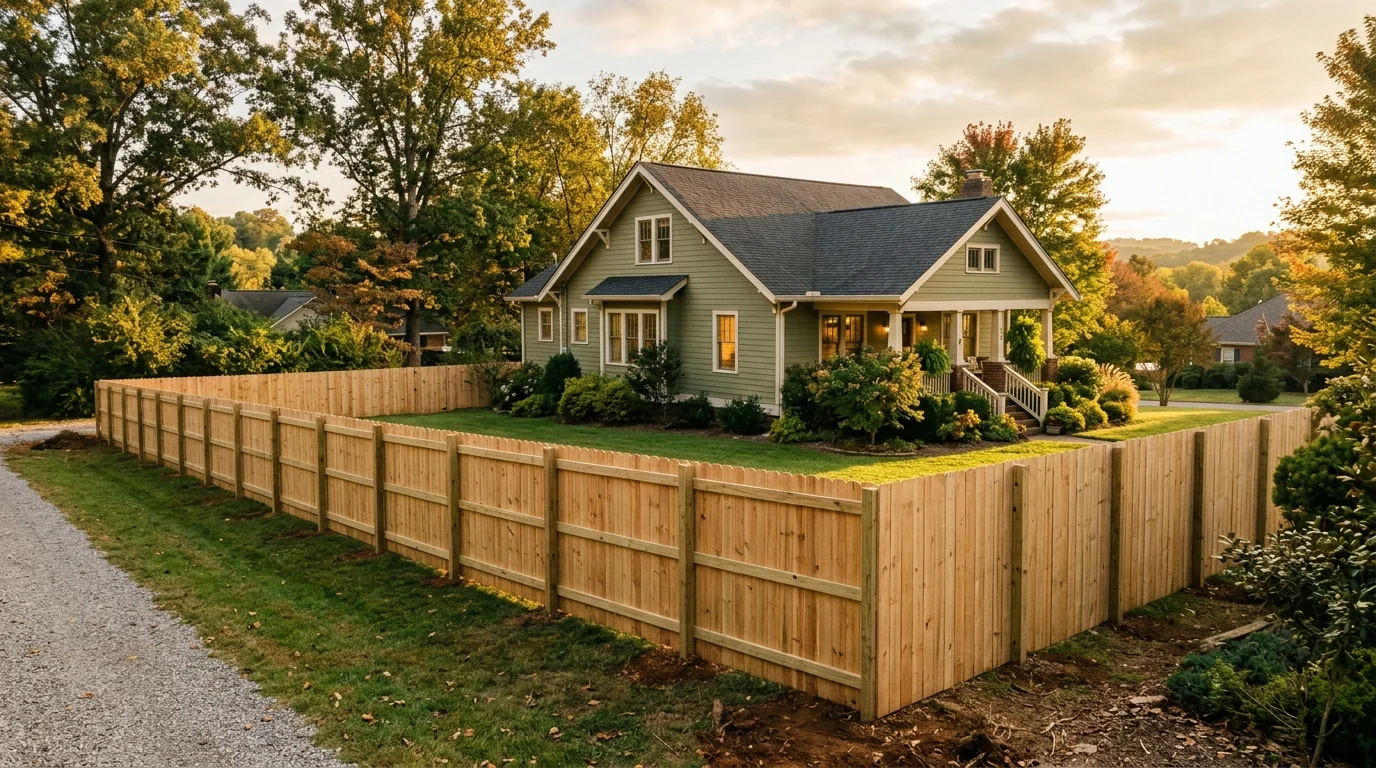
Fence installation in Halls
Halls is a Knox County community northwest of Knoxville where variable soils, sloped terrain, and flood-prone lowlands make fence post planning more demanding than average. Corryton loam and Bloomingdale silt loam soils each respond differently to driven or poured posts. Getting the right installer means matching post depth and footing type to the specific soil series under your lot.
Typical foundation type: mixed
Why Halls Fence Installation Is Different
Installing a fence in Halls, TN requires a closer look at the ground beneath your property than most homeowners expect. The area sits in the northwestern arc of Knox County, where the terrain transitions from creek-bottom floodplain to rolling hills with channery, stony soils. That combination means two houses a quarter mile apart can have radically different footing requirements. A fence company that quotes from satellite images without visiting the site is skipping the most important part of the job.
Soil and Geology in Halls
The USGS Soil Survey via NRCS Soil Data Access identifies five primary soil series in the Halls area, each with distinct implications for fence post installation.
Nonaburg channery silt loam covers steeper slopes at 12 to 25 percent grade and is noted as severely eroded and rocky. Augering through that material demands heavy equipment and adds labor time. Corryton loam on gentler 5 to 12 percent slopes is more workable but still requires concrete tube footings to resist lateral movement during rain events. Collegedale silty clay loam is similarly eroded on slopes and can shed water quickly toward post holes, undercutting soft concrete before it sets. Bloomingdale silt loam occupies the near-flat creek bottoms at 0 to 2 percent slopes and is flagged as occasionally flooded, meaning posts set in that zone must account for seasonal saturation that weakens standard footings over time. The Corryton-Udorthents-Urban land complex covers subdivided and graded parcels where soil profiles have been disturbed, making field assessment the only reliable way to know what a post hole will encounter.
Matching footing type to the specific series under your fence line is not optional in this market. It is the difference between a fence that stays plumb for a decade and one that tilts within two seasons.
Climate Considerations for Halls Fences
Halls sits in the humid subtropical zone typical of the Knoxville metro, with hot summers and winters that can drop hard enough to cause frost heave in shallow post footings. Annual temperature swings put real mechanical stress on fence materials and their anchoring points. Wood fences face the persistent threat of moisture cycling: wet springs followed by dry summers cause boards to expand and contract, loosening fasteners and accelerating rot in ground-contact zones. This Old House recommends digging post holes at least 3 feet deep to get below the frost line, a standard that matters even in Tennessee’s moderate winters when late-season freezes arrive unexpectedly.
Vinyl and aluminum fencing handle moisture cycling better than untreated wood, though they still require properly set posts to resist wind loading on open lots. Properties along Beaver Creek and other low-lying corridors see seasonal flooding that accelerates post decay and can shift fence lines if panels act as debris catchers during high water.
Housing Era and Lot Patterns in Halls
Halls developed largely as a rural-residential and suburban fringe community, with a mix of older farmstead parcels and newer subdivision lots platted during the Knox County growth periods of the 1980s through 2000s. Older properties often have larger lots with less consistent grading, meaning fence lines may cross multiple soil series in a single run. Newer subdivisions tend to have graded lots where the original topsoil has been stripped and replaced with fill, creating the Corryton-Udorthents-Urban land complex conditions noted in the soil survey. On those graded lots, the installer cannot assume that uniform soil continues to depth. A probe test at each post location is worth the extra few minutes before the auger hits an unexpected layer of clay or compacted fill.
Halls Neighborhoods and Fence Patterns
The Halls service area spans a variety of residential settings, each with its own terrain and housing character.
- Emory Road Corridor. A mix of established homes and newer infill construction on rolling terrain, with Corryton loam soils that call for concrete-set posts on most lots.
- Tazewell Pike Area. Rural-residential parcels with larger lot sizes, longer fence runs, and occasional Nonaburg channery silt loam on backyard slopes requiring augered holes.
- Beaver Creek Lowlands. Near-flat creek-adjacent properties on Bloomingdale silt loam. Flood overlay considerations apply, and wider post footings are standard practice here.
- Norris Freeway Corridor. Subdivisions from multiple decades with graded lots where disturbed soil profiles require on-site probing before quoting post depth.
- Gibbs Community. An older residential pocket with mature tree canopy, meaning root interference is a common complication during post-hole digging.
- Ball Camp Area. A transitional zone between Knox County’s western edge and the Halls community, with mixed lot sizes and varying slope grades.
- Powell Crossroads Adjacent. Subdivisions sharing characteristics with the Powell market, including tight lot spacing that makes privacy fence demand high and property-line coordination critical.
- Rural-Residential North Knox Parcels. Large-acreage properties where perimeter fencing runs can exceed 500 linear feet and soil variability over that distance is substantial.
How to Find a Halls Fence Installation Contractor
Finding a contractor who can handle Halls’ specific terrain and soil mix takes more than checking online reviews.
Demand soil-specific installation methods, not a generic pitch. A qualified Halls installer should be able to explain, without prompting, why Bloomingdale silt loam near creek drainages requires a different footing approach than the rocky Nonaburg series on higher ground. If a contractor proposes identical post depth and footing type for every lot in the area, that is a sign they are not reading the site.
Ask for a written warranty covering both materials and labor. Material warranties from manufacturers cover panel defects. Labor warranties cover the workmanship on post setting, gate hanging, and panel alignment. In Halls’ variable soil conditions, the labor warranty is the one that matters most. A one-year labor warranty is the minimum worth accepting; three years is reasonable for a well-set installation.
Verify Knox County experience, not just general Knoxville experience. The soil series in the Halls area differ from those in south or east Knox County. A contractor who has worked Corryton loam and Nonaburg channery soils will approach augering differently than one whose experience is limited to the flatter, more uniform lots in Knoxville proper. Ask for specific neighborhoods where they have worked.
Insist on a site visit before any quote is finalized. Satellite-image quotes miss root zones, underground utilities, grade changes between front and back yard, and flood-zone proximity. A contractor who commits to a price without walking the line is building in a contingency buffer at your expense or setting themselves up to ask for change orders mid-project. A proper free fence inspection removes that ambiguity before work begins.
What to Expect from a Halls Fence Inspection
A thorough pre-installation inspection in Halls covers four areas.
Exterior walk-around. The estimator walks the full fence line, noting grade changes, existing tree roots within the post zone, proximity to property lines, and any existing fence remnants. Rocky Nonaburg series areas on slopes get flagged for equipment access. Gate locations are chosen to avoid low points where water pools.
Interior and lot-center assessment. For larger rural parcels, the interior of the fence run matters as much as the perimeter. Long diagonal runs crossing multiple soil series get marked for varied footing depth at each soil transition. The estimator checks for any underground drainage pipes or septic setback distances that affect post placement.
Soil probe and post-location sampling. On Halls properties, a responsible inspection includes probing at planned post locations to identify shallow rock, wet clay layers, or fill-soil inconsistencies. This takes five to ten minutes per planned post cluster and prevents the most common mid-installation surprises.
Slope and floodplain assessment. Properties near Beaver Creek or other low-lying Knox County drainages fall within floodplain overlay zones. The inspector identifies whether the fence line crosses a flood-risk area, since Knox County may require elevation certificates or restrict solid panel fencing in those zones. Stepped or racked panel installation may be necessary on grades steeper than 10 percent.
Repair Methods and Fence Types Used Most Often in Halls
Understanding which fence types and repair approaches fit Halls properties helps homeowners plan for both installation and long-term maintenance. For a full breakdown of options, visit the fence installation methods hub.
- Wood privacy fencing. The most requested material in the Halls area, particularly for residential lots where sightlines to neighboring homes are close. According to Bob Vila, wood privacy fencing runs $27 to $60 per linear foot installed. In Halls’ climate, ground-contact posts should be pressure-treated to at least UC4B rating. See the wood fence cost spoke for a fuller breakdown.
- Vinyl privacy fencing. A growing choice for homeowners who want privacy without annual maintenance. Bob Vila’s vinyl fence guide puts vinyl at $15 to $40 per linear foot, with 6-foot panels averaging $25 to $40 per linear foot. Vinyl handles Halls’ wet-dry moisture cycling better than untreated wood. See vinyl fence cost details.
- Chain-link fencing. Common on larger rural-residential parcels for perimeter security and pet containment. Bob Vila cites chain-link at $15 to $30 per linear foot, making it the most cost-effective option for long runs across open North Knox parcels.
- Post replacement and fence repair. Older Halls properties with failing posts in Bloomingdale silt loam zones often need targeted post replacement rather than full fence replacement. Catching shifting posts early prevents panel damage from spreading down the line. The fence repair hub covers what to look for before a single-post problem becomes a full-section replacement.
- Aluminum or ornamental fencing. Used primarily for front-yard accent and pool barrier applications. Bob Vila reports aluminum at $17 to $90 per linear foot depending on style and gauge. Pool barriers must meet CPSC minimum height requirements of 48 inches above grade on the exterior face, per CPSC Safety Barrier Guidelines for Residential Pools.
For a side-by-side cost comparison across all material types, the fence cost hub is the best starting point.
Halls Building Permits and Code Requirements
Halls operates as an unincorporated community within Knox County, which means there is no separate Halls municipal permitting office. All residential fence permits are handled through Knox County Code Enforcement, which administers the county’s adopted building codes and zoning ordinances. Homeowners planning a fence installation should contact Knox County before work begins to confirm whether a permit is required for their specific parcel, lot size, and fence height.
Knox County enforces residential setback requirements that determine how close a fence may be placed to the front property line, side yard, and rear yard. These setbacks vary by zoning classification, and parcels along Emory Road or Tazewell Pike with agricultural or rural-residential zoning may have different rules than lots in platted subdivisions. Height limits also vary by zone; most residential zones cap front-yard fences at 4 feet and allow up to 6 feet in rear and side yards, but confirming the exact rule for your parcel before ordering materials prevents costly modifications after installation.
Properties in or adjacent to FEMA-mapped floodplains along Beaver Creek and other drainages may face additional review before a fence permit is issued. Knox County Planning reviews floodplain development permits, and solid-panel fencing in a floodway can require an engineering analysis to confirm the fence will not obstruct water flow. This is not a paperwork formality. Improperly placed solid fencing in a flood-risk zone can shift the liability for downstream flooding to the property owner.
Other Tennessee Communities We Serve
Halls is one of several Knox County communities in the service area. If you are researching options for a neighboring property or helping a family member plan a project nearby, these pages cover the specifics for their area.
- Fence installation in Knoxville, TN covers the full range of Knoxville metro soil conditions, permit offices, and neighborhood patterns across the city’s varied districts.
- Fence installation in Powell, TN addresses the Powell community’s similar mix of suburban subdivision lots and rural-residential parcels just south of the Halls area.
- Fence installation in Karns, TN covers the Karns community on Knox County’s western edge, where terrain and soil series share characteristics with the Halls market.
Neighborhoods served
Halls neighborhoods
- Emory Road Corridor
- Tazewell Pike Area
- Beaver Creek Lowlands
- Norris Freeway Corridor
- Gibbs Community
- Ball Camp Area
- Powell Crossroads Adjacent
- Rural-Residential North Knox Parcels
Questions
Halls fence installation FAQs
Why are fence posts so prone to shifting in Halls yards?
How much does fence installation cost in Halls?
Do Halls homeowners need a permit to install a fence?
How do you find a trustworthy fence contractor in the Halls area?
Which Halls neighborhoods tend to have the most fence installation projects?
Does the brand offer free fence inspections in Halls?
What foundation or footing type is most common for fences in Halls?
Free inspection
Free Halls fence estimate
On-site elevation survey, written quote within 24 hours, no obligation.