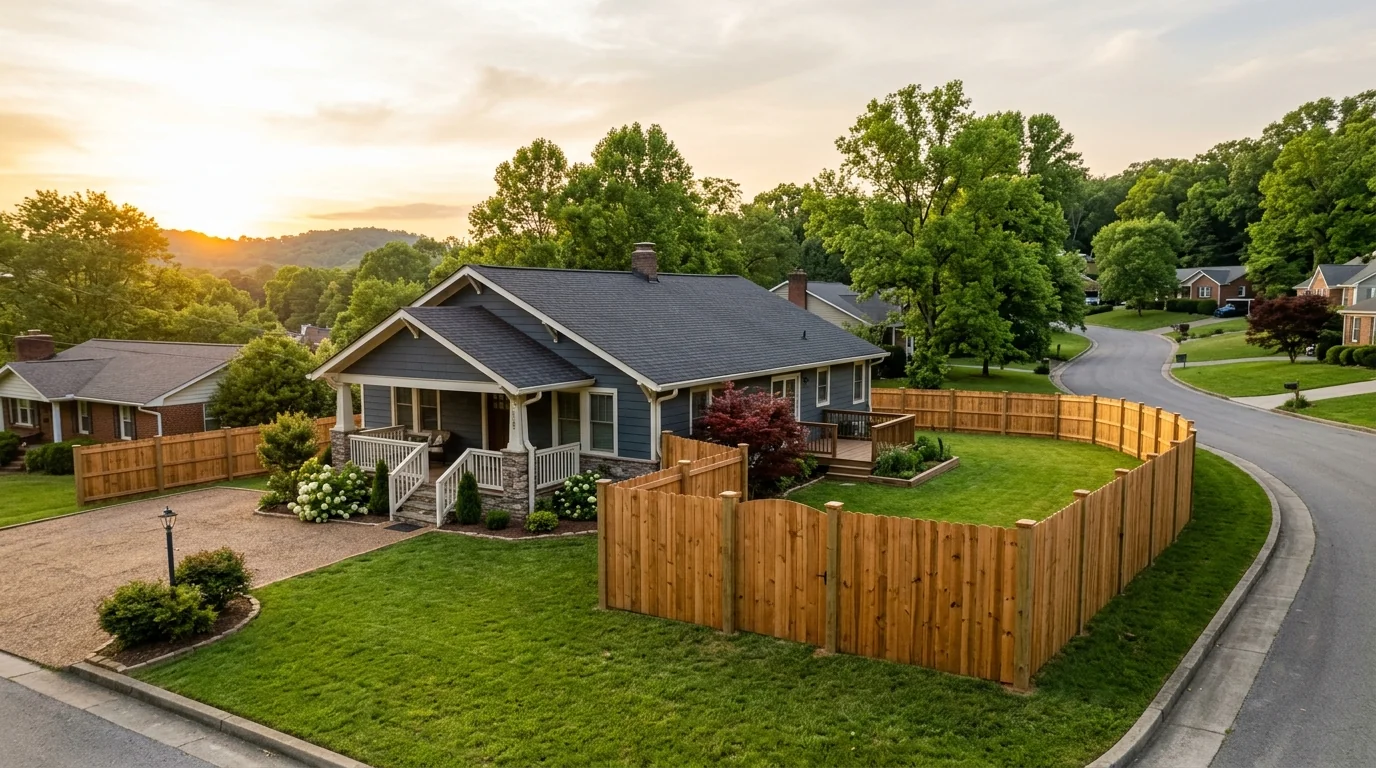
Do I Need to Tell My Neighbor Before Installing a Fence
Tennessee has no state law that forces you to notify a neighbor before building a fence on your own property, but doing so is strongly advisable. Local ordinances, HOA covenants, shared boundary rules, and practical concerns about property lines all create situations where skipping that conversation can cost you time and money to fix later.
Updated Jan 30, 2025 · 6 min read
The short answer
Tennessee has no statewide law that requires you to notify your neighbor before installing a fence on your own property. You are generally free to build up to the setback limits without asking permission. That said, skipping a conversation is a gamble. Property line errors, shared boundary questions, HOA restrictions, and local permit rules all create situations where a quick heads-up before the crew arrives can prevent an expensive problem later.
Why talking to your neighbor still makes sense
Property lines are rarely where you think they are
The single most common cause of fence disputes between neighbors is a fence that ends up on the wrong side of the property line. Recorded plats and remembered fence lines from previous owners are notoriously unreliable. Hiring a licensed land surveyor to mark your corners before installation is the most dependable protection you have.
If your fence encroaches on your neighbor’s land, even by a few inches, Tennessee courts can require you to relocate or remove it at your own cost (Nolo, Fences and Boundary Disputes). The cost of a survey is a fraction of what relocation and any associated legal fees would run.
Letting your neighbor know in advance also gives them a chance to flag any concerns about the line before the posts are set rather than after.
Shared boundary fences are a special case
If you plan to build exactly on the boundary line, the fence may become a shared structure. Tennessee does not have a formal cost-sharing statute that forces neighbors to split expenses the way some states do. Cost sharing is a private agreement. If you want your neighbor to contribute, get that agreement in writing and keep a copy with your deed documents.
A fence set a few inches inside your own property avoids the shared-ownership question entirely, but it gives up a small strip of land and still requires accurate staking.
Practical goodwill matters in close-knit neighborhoods
Beyond the legal considerations, a neighbor who feels blindsided by a crew showing up at 7 a.m. is more likely to scrutinize the placement, report permit concerns, or file a complaint with an HOA. A brief conversation, whether in person or by written note, costs nothing and often prevents that friction entirely.
Local rules that affect Knoxville homeowners specifically
City of Knoxville permit requirements
Within City of Knoxville limits, a permit is required for any fence taller than 6 feet and for fences in historic or overlay districts regardless of height. Contact the City of Knoxville Plans Review and Inspections office before you begin. Typical permit fees in the area run $40 to $90.
Unincorporated Knox County
Unincorporated Knox County mirrors the city threshold: permits are required for fences over 6 feet. Knox County Codes Administration and Inspections handles these applications.
Town of Farragut
Farragut deserves its own mention because its fence ordinance goes further than the typical Knox County standard. The Town of Farragut Community Development office applies design review on fence projects in ways that go beyond a simple height check. Materials, style, and placement all factor in. If your property is in Farragut, contacting their office before you buy a single board is time well spent.
West Knox HOA communities
High HOA density in communities across Farragut, Hardin Valley, Northshore, and Choto means that CC&R approval often matters more than the municipal permit. Common restrictions include a 6-foot maximum height for privacy fences, prohibitions or tight limits on front-yard fencing, and approved material lists that favor aluminum ornamental or vinyl over raw pressure-treated wood. Violations can result in fines and mandatory removal.
How Knox County’s terrain affects fence placement
Knox County sits on karst limestone geology, which means subsurface voids and shrink-swell clay soils are common across the valley. Standard post-setting depth of 30 to 36 inches works for most flat lots, but ridge-position properties with shallow bedrock may require rock augering. The 47.9 inches of average annual rainfall Knox County receives (NWS Morristown KMRX, 1991-2020 Climate Normals) drives soil movement that can shift posts over time, especially along low-lying lots where stormwater concentrates. Ice loading in winter is also a factor here. Ice accumulation adds weight to fence panels and overhanging tree limbs, and wood fences with vine or vegetation growth are most vulnerable when a freezing event hits.
These site conditions are worth discussing with your installer before they set a post. They are also worth raising with your neighbor if the fence will run along a drainage path that both properties share.
HOA approval: do it before the permit, not after
Many homeowners apply for a building permit and then discover their HOA requires a separate architectural review. The HOA process sometimes takes longer than the permit. If you build without HOA approval and the association rejects the design, you may be required to tear down an otherwise code-compliant fence.
The right order is: survey first, HOA submittal second, permit third, installation last.
What this means for your project
Once you have confirmed your property line, reviewed your HOA covenants, and checked permit requirements, you are ready to plan the installation itself. Pricing varies by material. Wood privacy fence runs $27 to $60 per linear foot installed, and vinyl ranges from $15 to $40 per linear foot for materials alone, according to Bob Vila’s fence cost guides. The fence cost guide on this site breaks down what typical Knox County projects actually run for wood, vinyl, and aluminum options.
For guidance on choosing a style that fits both your HOA rules and your yard, the fence installation overview covers material comparisons and what to expect from the installation process. If you already have an older fence with damaged posts or sections that need attention before a neighbor conversation becomes necessary, the fence repair resource covers your options.
When you are ready to get a project-specific number, you can request a free fence installation quote and have a local installer look at your lot, verify setbacks, and give you an accurate scope before any shovels go in the ground.
A checklist before you break ground
- Order a property survey or pull your existing plat and mark corners with stakes.
- Review your HOA CC&Rs for height, material, and placement restrictions.
- Contact the correct permit office: City of Knoxville Plans Review, Knox County Codes Administration, or Town of Farragut Community Development, depending on your address.
- Let your neighbor know the planned location and timeline in writing. Keep a copy.
- If the fence will sit on the boundary line, draft a simple written cost-sharing or ownership agreement.
- Confirm your installer will pull the permit if one is required, and ask how they handle post-setting on rocky ridge lots.
Taking these steps before installation day means the fence that goes up stays up, without a legal dispute, a removal order, or a strained relationship with the person who lives next door.
For additional guides on materials, maintenance, and project planning, visit the fence installation learning hub.
Free written quote
Planning a fence? Get a free quote.
On-site measure and a written quote within 24 hours. No obligation.
Questions
Do I Need to Tell My Neighbor Before Installing a Fence FAQs
Does Tennessee law require me to notify my neighbor before installing a fence?
What happens if I accidentally build a fence on my neighbor's property?
Who owns a fence on a shared boundary line in Tennessee?
Do I need a permit to install a fence in Knoxville or Knox County?
Can my HOA block me from building a fence in Knoxville?
What is the good-neighbor rule for fences in Tennessee?
How far from the property line does a fence need to be in Knox County?
Free quote
Talk to a Knoxville fencing pro
On-site measure and a written quote within 24 hours. No obligation.